about
science-informed
“Science” doesn’t amputate the “heart” of equitation. It shows us the subtle, elegant, and beautiful mechanisms that make up its structure so it’s accessible to everyone. Principles from movement science, learning theory, behavioral science, physics, kinesiology, biomechanics, biology, neuroscience, and psychology inform every detail.
experiential
Knowledge of theory does not give you presence of mind. It's in the creatively applied sciences that the mind-body connection is undeniable. Allowing movement to flow organically from intention creates joy and ease within the mover.
equitation
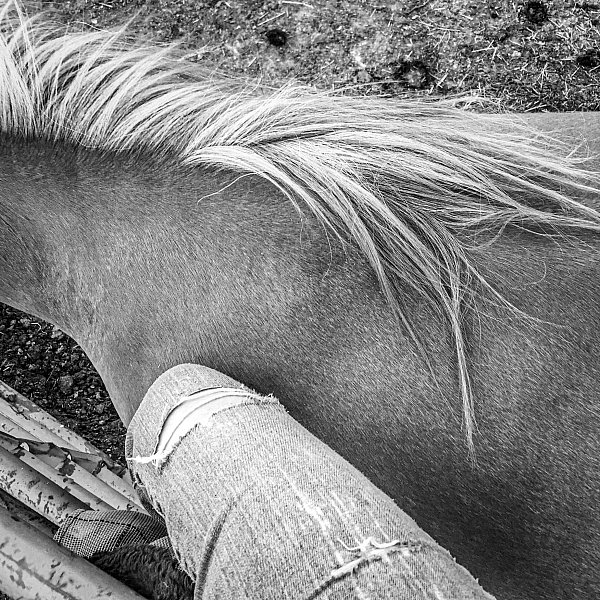
When a horse feels whole within themselves, they show up with grace and power in the world. The human plays a supporting role in the horse's process of feeling whole.
What is Positive Reinforcement?
Positive reinforcement (R+) is adding something the horse likes (in this case, food) to increase the likelihood of a behavior happening again. A marker (usually a sound such as a “click” from the clicker) tells the horse exactly what they did that will earn the food. Because food is reinforcing (appealing) to a horse, they will try that behavior again in order to get the food.
Positive reinforcement is a precision tool for communication and teaching skills. R+ is taught as a sensory or visual cue. Behavior is shaped using the smallest steps necessary, making learning easy and thorough while managing fear and frustration thresholds. It improves your ability to recognize good moments.
The tools of positive reinforcement training, such as targeting, can be used to teach tactile cues without escalating pressure, making it look like traditional pressure/release cues. This can work even in the show ring, where bits are still often required.
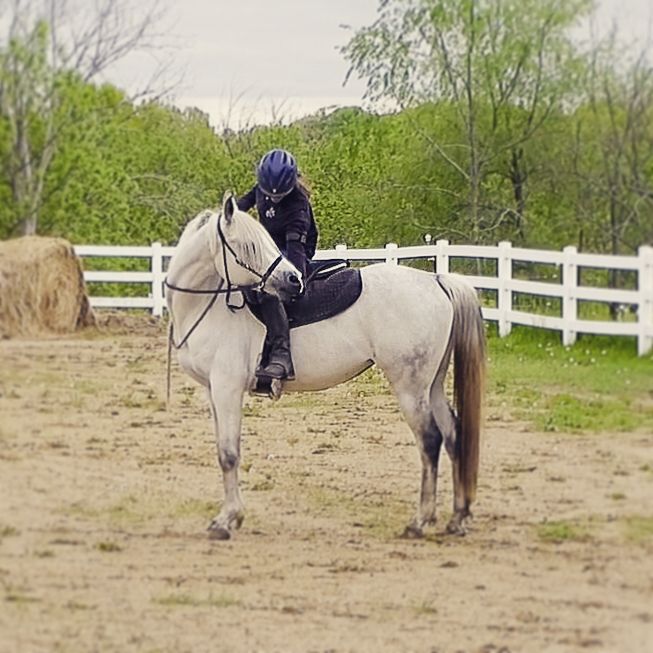
The sum of the interactions IS the relationship
One of the criticisms of a constructional approach to working with horses (using food to shape behavior) is that people are turned off by what looks to be a mechanistic way of operating with a horse. That it’s entirely transactional and nothing more. That it’s simply goal-driven, and the relationship piece is missing. That… would be missing the point entirely. The point is to give yourself the theory, the scaffolding, so you can trust your body to find the flow.
It’s impossible to separate the training and the relationship. The only way to not have a relationship is to not interact at all. There will always be an uneven power dynamic between horses and people. How you handle that disparity is what creates the relationship. The quality is determined by how you spend that time. How response-able you are. How skillfully and thoughtfully you navigate not only conflict or misaligned intentions, but success as well. The ability to step back and see the structure and the opportunities it provides doesn’t preclude the relationship, it builds it.
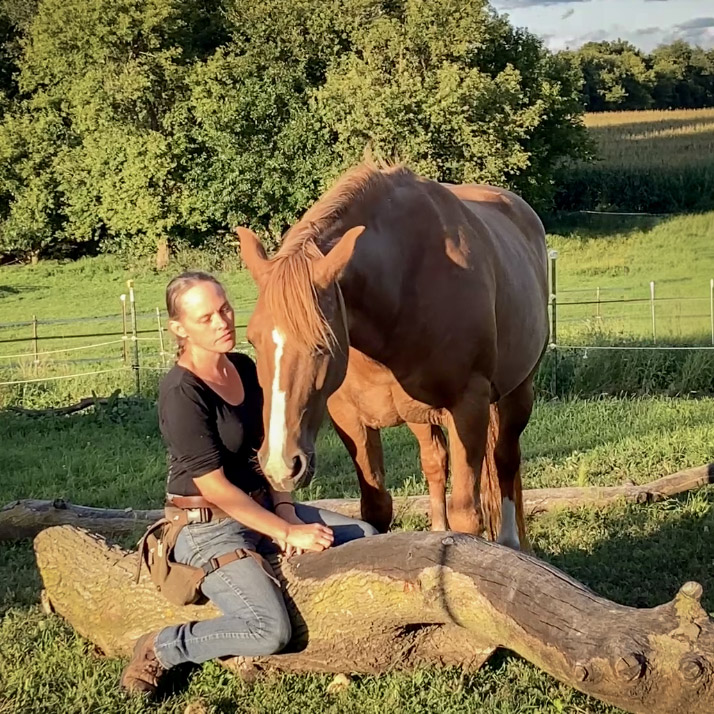
I try not to take myself seriously
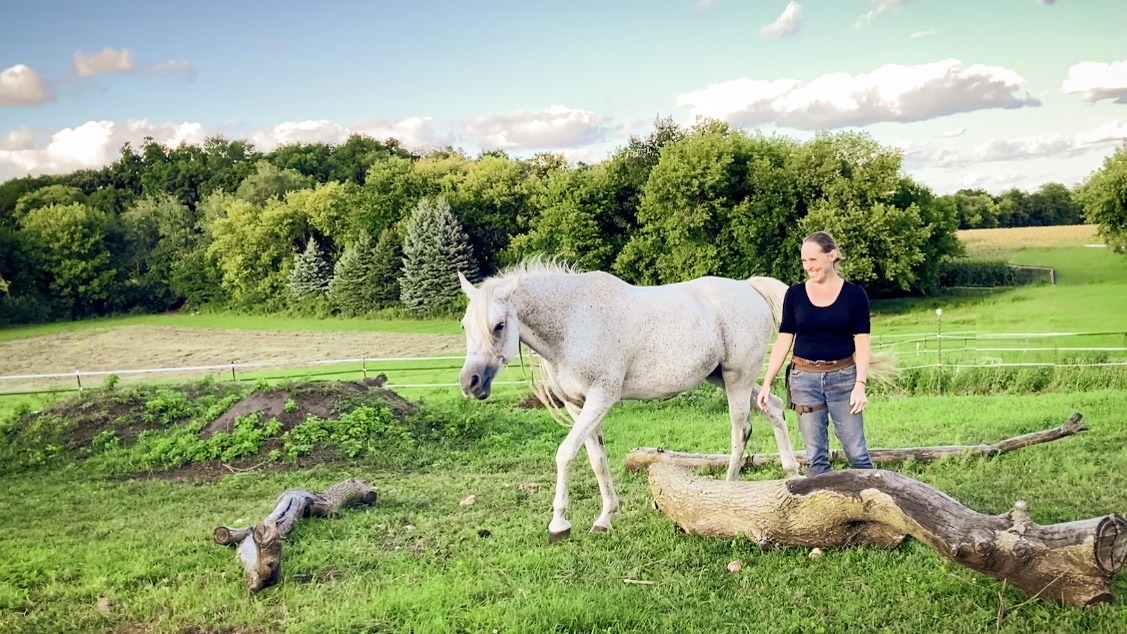
I'm a failed traditional horsewoman. I understand traditional skills and methodologies, and how and why they work, but after more than thirty years working with horses I did not have the kind of success I have now with predominantly positive reinforcement training, with a little bit of tactful negative reinforcement where applicable.
I consider myself to be an advocate for the horse/human dyad, working with horses and riders together as a unit. Hopefully with giggling.
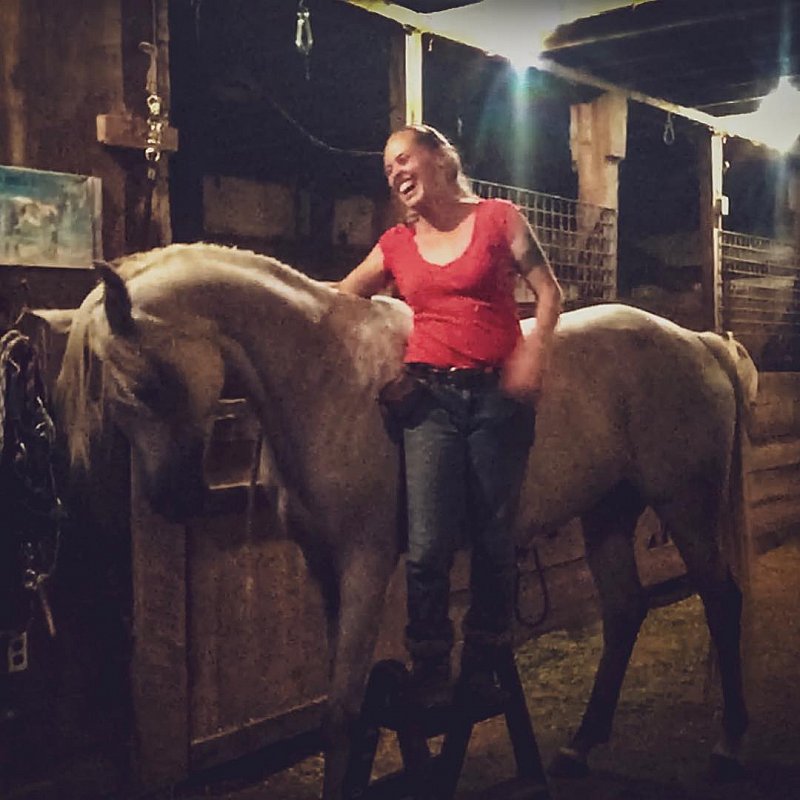
It's always one thing and the other
I love synthesizing information from wildly different sources, and sharing my particular mashup with horses and people. I've done a little bit of a lot of things - trail riding, jumping, western pleasure, starting young horses under saddle - but my real interest is dressage, and especially "dressage in the wild," out on the trail or with obstacles.
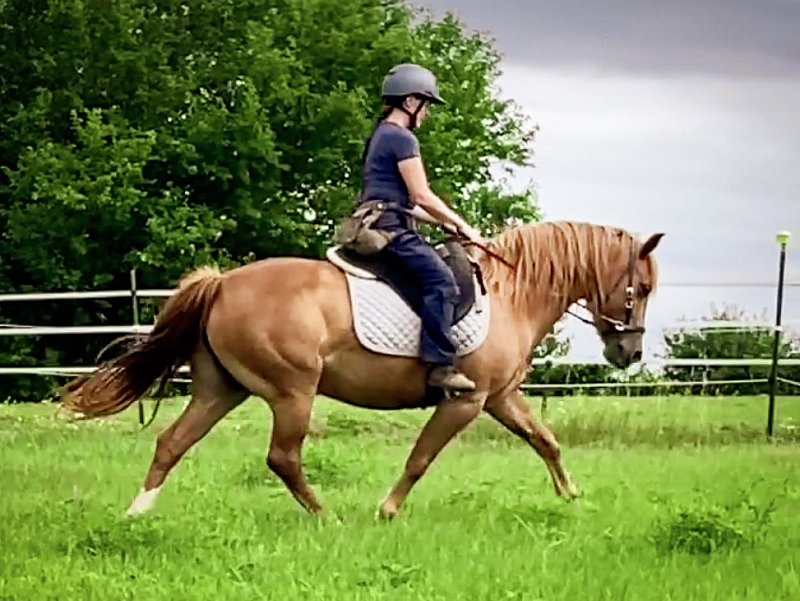
I have had Fibromyalgia for over 40 years. This has given me deep personal insight into how chronic pain and fatigue affects all aspects of life, for people and animals. It's because of this that I've been drawn to study neuroscience, behavior, biomechanics, and so forth. My life experiences with neurodivergence and chronic illness have given me some really strong opinions on the one-size-fits-all approach in American culture, and in the equestrian industry in general, particularly with respect to learning.
I feel that the age of "horse-as-tool" is largely over in many societies (not all), and we can work with horses in a way that preserves their ethology while also benefitting ourselves (a privilege for us, but still a responsibility). There's a paralell to people as well: we are not just workers or taxpayers but whole worlds of unexplored territory.
I also enjoy synesthesia - the ability to experience one sensory input through another. So, for me, numbers, letters, words, sounds, etc. all have colors, textures, temperatures, a kinesthetic feel, and so on. I absolutely adore this aspect of having a weird brain! It particularly informs how I experience riding, since it's such a rich source of sensory input. I'm always looking for people who can share that vibe and want to explore their own riding and their own bodies this way.
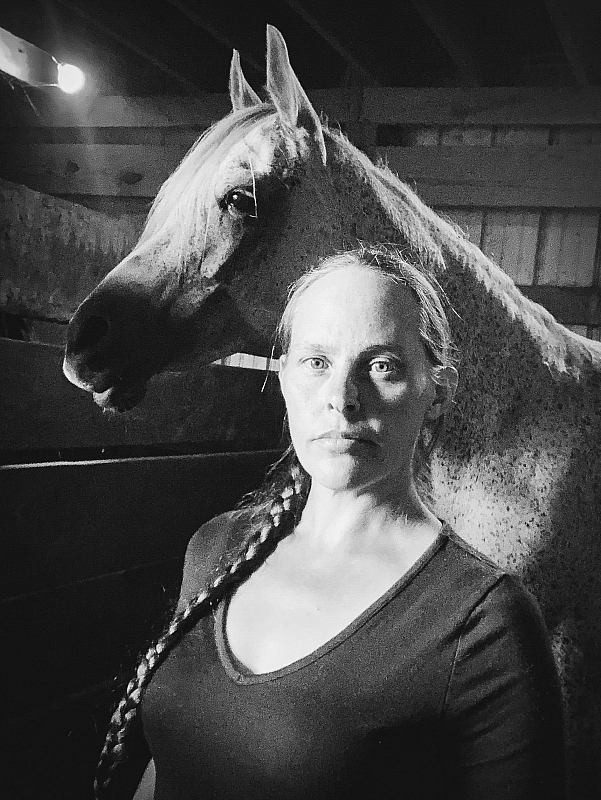
ShortHorse Studios
images beyond imagination
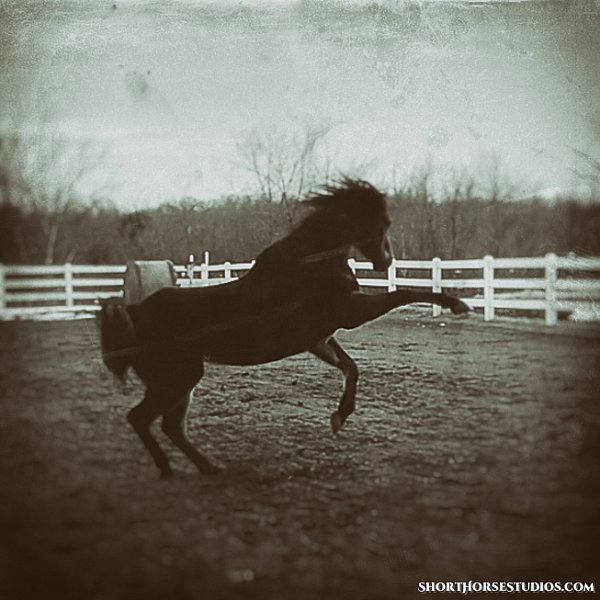
There is something about the presence of a horse that speaks of the ethereal. There are many everyday moments we spend with our horses that don't feel like anything larger than what they are: minutes of the day. However, those that spend these minutes with a horse know there is a pervasive power, subtle and intangible, that transcends the mundane, and gives the horse a quality of deity, and the time spent with them a time of worship.
I’ve been a photographer since May of 2001 (see ShortHorse Studios here), which is a long time to watch horses and people interact. More than anything, that has helped hone my timing and ability to see details in behavior and movement.