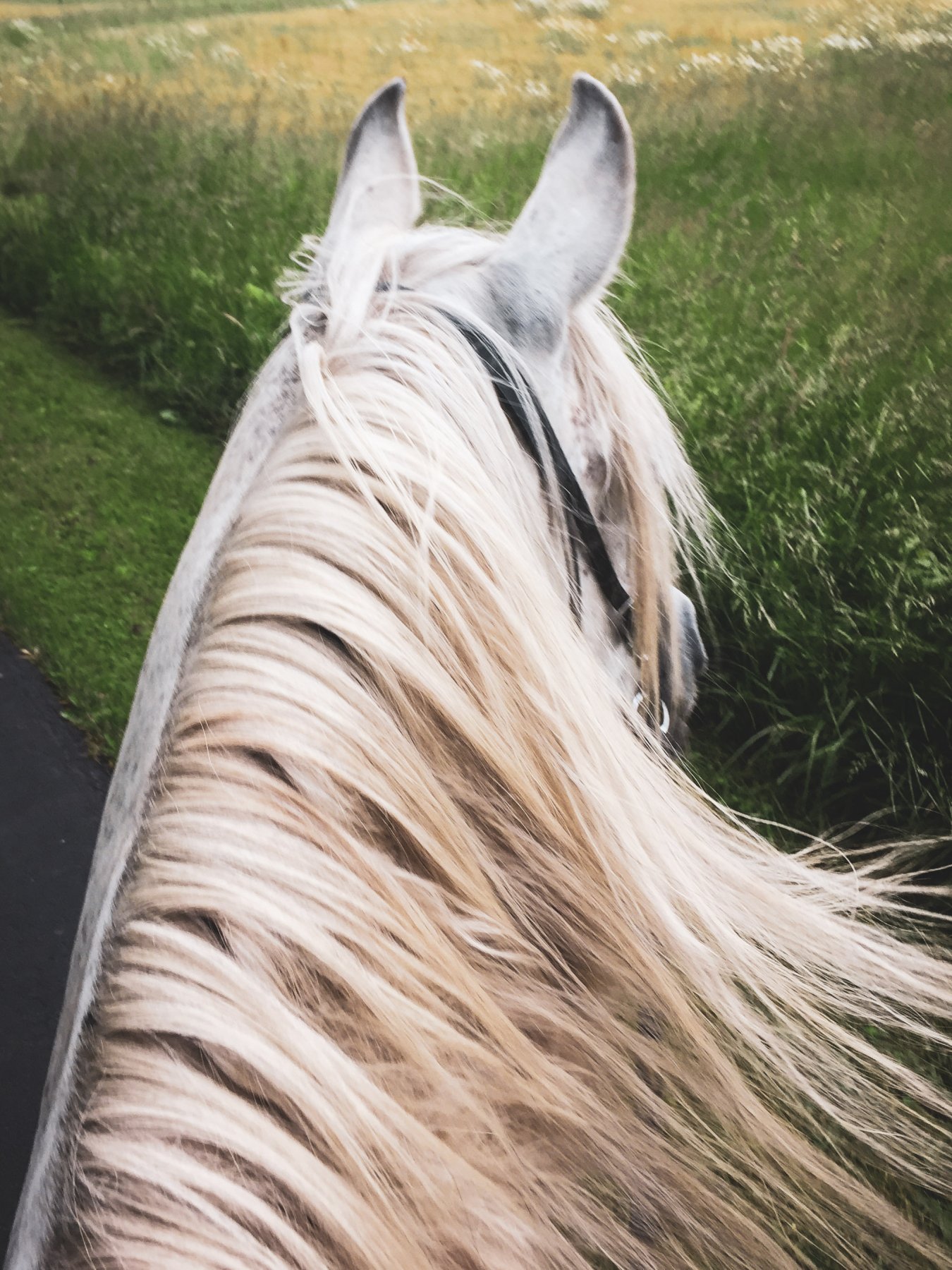
intro to ideokinesis micro-workshop
Do you forget to breathe when riding? Do you sometimes think in pictures?
Do you have synesthesia? This might be for you!
Introduction
This "smallwork" develops the skill of attending to sensory input, which is an entry point to feel, because the quality of sensory feedback to the brain equals the quality of motor output from the body. This is qualitative, not quantitative. It's about the experience itself, not how much you can get done. In the beginning, you're not trying to influence immediately, just listening to your body as well as listening for feedback from the horse. The changes happen subtly by changing your perspective.
What is ideokinesis?
Loosely defined as “Imagery as related to movement,” it's based on the idea that thinking about something and experiencing it are the same in the mind/body. Combining breathing, visualization, metaphor, and movement can help you create a more whole-body-organization effect, rather than manipulating individual physical body parts to try to construct and maintain a static riding position. It's a “back door” to developing proprioception and an entry point to "feel."
Find ways to:
- develop the skill of attending to sensory input in a non-threatening environment
- feel safer in your body by feeling more of your body, especially during stressful moments
- break out of rigid, position-first thinking and adapt to changes in the horse's movement to be "response-able"
This is for you if you:
- have trouble keeping an effective position
- experience anxiety, fear, stiffness, bracing, etc. while riding
- want to explore a different way to warm up, connect, and check in while riding
- already think in pictures and want to harness that feature of your brain
This is not discipline-specific; it will help with any kind of riding from trails to Dressage to jumping, and at any level. Some of it can also be done on the ground before trying it in the saddle. These techniques are something to come back to when "it’s not working" or if you'd like greater clarity with a specific problem.
What it looks like
My definition of "feel" consists of timing, mechanics, and use of repertoire. This is about mechanics and repertoire.
- 15 minutes on the ground to see the breathing patterns, 45 minutes riding to experiment
- simple breathing patterns and sample "point, line, and form" visualizations to get started
- mostly in walk, other gaits possible but not necessary
- not trying to influence, just listening to your body as well as listening for feedback from the horse
What you need
Choice of tack is up to you, bridleless/neckrope horses must have some headgear for group safety, but if you're alone and you're comfortable with your horse and your environment, do what feels good. To start, you must be able to ride on a loose rein in a straight line, otherwise essentially nothing is required of the horse. You can always add complexity. It's also important to have an open mind - this is extremely, deceptively simple, but not easy!
By the way, what is synesthesia?
Essentially, it's experiencing one sensory input through another. This Wikipedia article is a pretty good explanation, and if it resonates, it might help you to see the places we can go with ideokinesis. Even if it doesn't, it might spark a little creativity in your personal riding philosophy.
one-hour clinic
2 to 6 riders in a group setting
$25/rider, $10 to audit, travel fee may apply (ask for info)
Talk to me
What questions do you have?
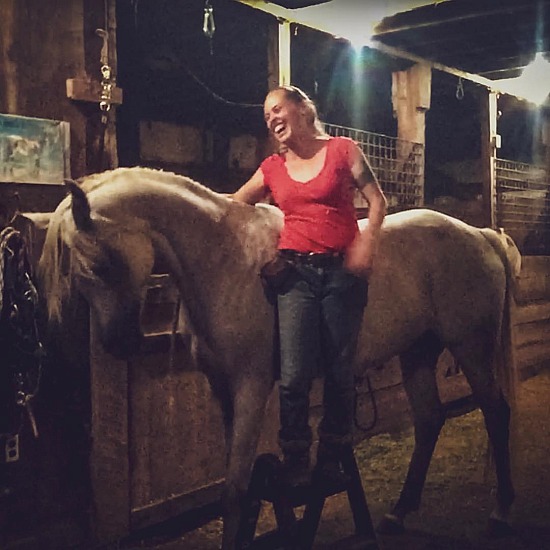
Heather K McManamy
South Central WI
Text welcome at 608-333-6950 - let me know who you are!