
positive reinforcement mini-workshop
Learn to see and feel more deeply
This is more than just using food to train horses. In fact, food, while important, isn't the focus here. This workshop is designed to teach horses and people a different, more creative way to look at horse training, learning "feel," and developing skills that can be used in the real world. When used correctly, it’s a tool for communication that accelerates learning for both horse and human, and gives you a different kind of understanding than what you may have encountered in other modalities.
It’s for both horses and people who are completely new to positive reinforcement, or for people who have tried it, but weren't successful and their horses tried to eat them instead. In addition to a new perspective on seeing training through the lens of applied behavioral science, you will learn how to get started safely with using food for training from the very beginning.
Introduction
- The foundational pattern of how behavior works
- How positive (R+) and negative (R-) reinforcement work
"Feel" is timing, mechanics, and use of repertoire
- A broad view of the skills involved in learning "feel" (yes, you can learn feel!)
- How you move, your awareness of your body, and how it affects your horse
- The first pattern to teach the horse so they learn how to take food safely
Two basic skills
- Stand still/face forward, to teach a horse how to take food safely
- Touch a target, for both stationary and movement behaviors
- The possible next steps for using those skills in the real world
- Things to keep in mind when getting started
When it's not working
- Going beyond labels to more clearly interpret what a horse's body language is saying about their state of mind
- A broad view of breaking down behaviors (shaping) to make them easy to teach and learn
Even if you predominantly use pressure-and-release/negative reinforcement and would never use intentional positive reinforcement in your daily training, this workshop offers a low-commitment, small-scale look at a different way of approaching the interaction between horse and human.

You will need:
- An open mind and a sense of humor
- A horse, if you want to participate
- A shallow, wide feed tub for your horse
- Some sort of bag, satchel, fanny pack/bum bag, etc. that you can put hay pellets in and hang on your body, so your hands are free - hands-free and easy access are very important!
I will provide:
- A lecture on the concepts and skills we'll work on
- Timothy hay pellets. If your horse is a really picky eater, we can talk about what might work. Please don't bring really yummy, actual "treats" (this probably won't work in your favor).
- Target stick of some sort (probably a flyswatter)
- Hopefully comedic entertainment
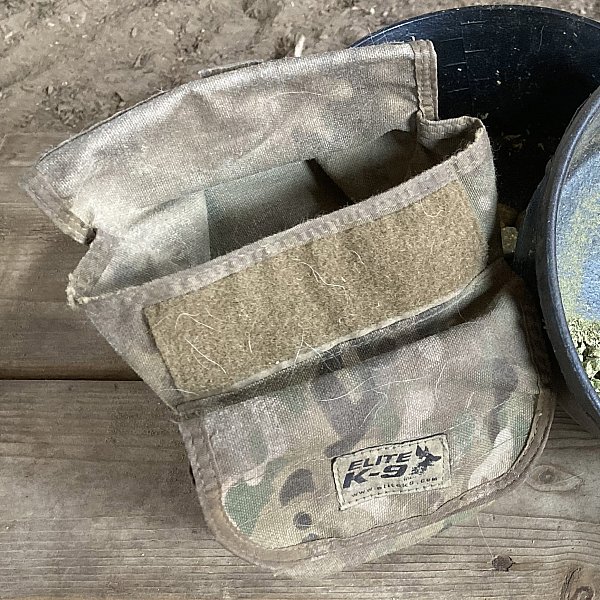
Food pouch
Easy access opening on top, and a loop for a belt on the back for hands-free carrying. This one holds about 7 cups.
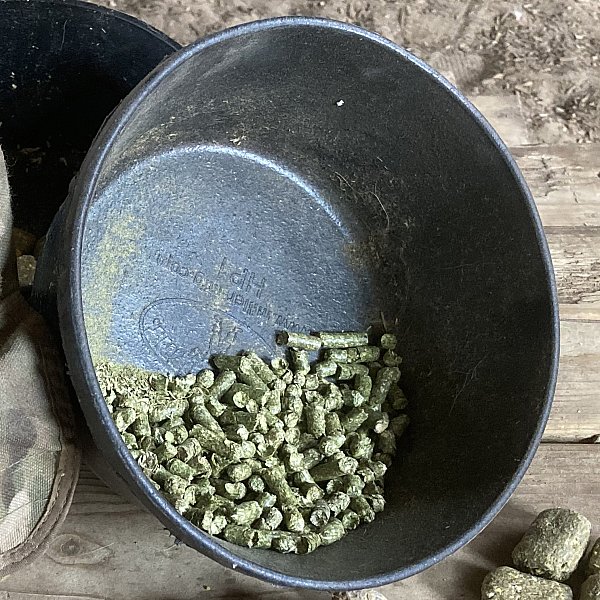
Hay pellets
Generally timothy pellets as they're lower starch/sugar and not too exciting, and a feed tub. Commercial treats might be too much of a distraction. We use food, but it's not the focus!
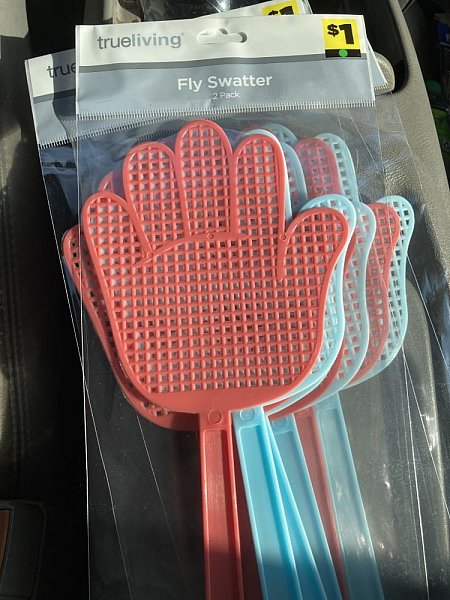
Flyswatter target
May not always be a fun hand shape, but it's a great start for teaching a horse how to touch a target.
Cost for this workshop is $50/pair for a 30-minute one-on-one session for up to 6 people with horses, and $25/person for auditors. This works best if the horses are able to be loose without a halter/leadrope, however handlers know their horses best and horse and handler safety should come first.
If you have a facility, but you don't have enough people with horses to participate but you still want to see what I can offer, I can also do a demo with a horse or two that you have available in addition to the lecture portion. Contact me to chat about how we can make that happen!
Want to know more?
Here is a little e-book I wrote on starting positive reinforcement training (click HERE to download). It's free, with no strings attached. It's everything I like new clients to know when considering working with me. I'm happy to answer questions!
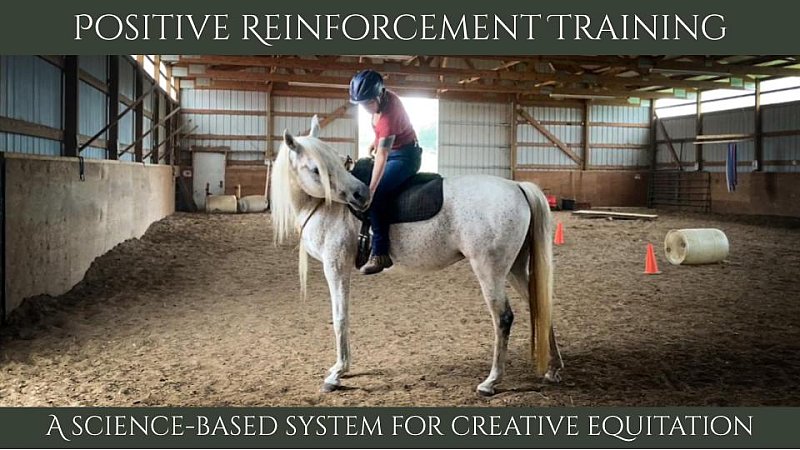
Header and description photo credit: Ella Chacon
All other photos Heather K McManamy/ShortHorse Studios